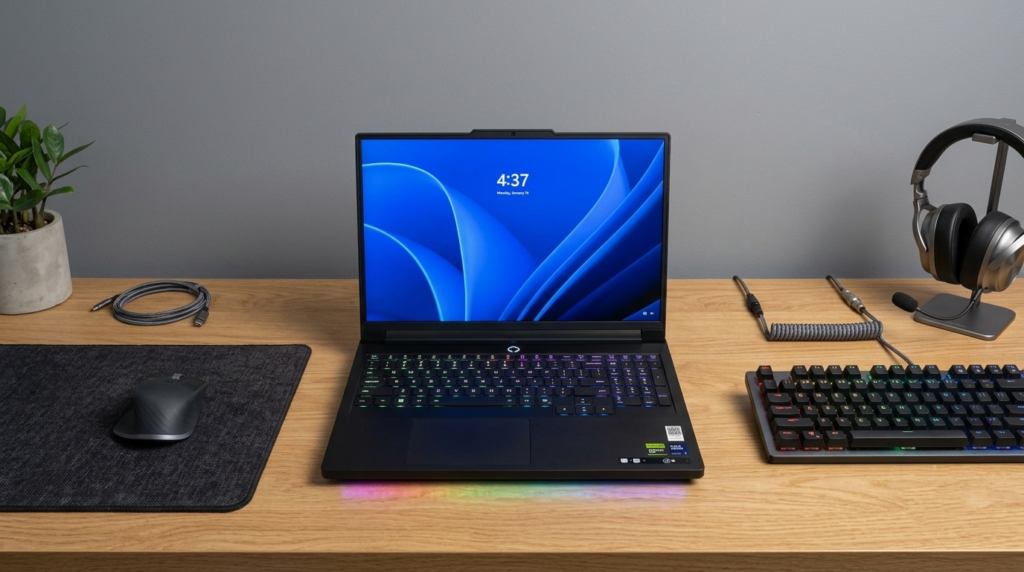
The Lenovo Legion 7i (Gen 10) marks a massive technological leap forward for premium portable gaming rigs. Lenovo has dramatically overhauled this generation, delivering a chassis that is roughly 10% thinner and 7% lighter than its predecessor, making it feel more like an elegant ultrabook than a traditional thick gaming workstation. Beneath its stealthy Glacier White aluminum body lies cutting-edge silicon: Intel’s Core Ultra H-series processing architecture and NVIDIA’s highly anticipated RTX 50-series graphics card. Built for creators, students, and competitive gamers alike, this machine sets out to define a new standard for modern gaming notebooks.
📊 Technical Specifications for Lenovo Legion 7i (Gen 10)
Below are the exact component specifications of our high-end review unit:
| Component | Specification as Tested |
| Processor (CPU) | Intel Core Ultra 9 275HX (24 Cores / 32 Threads, up to 5.4GHz Turbo) |
| Graphics (GPU) | NVIDIA GeForce RTX 5070 Laptop GPU (8GB GDDR7, 115W TGP) |
| Memory (RAM) | 32GB DDR5-6400MHz (Dual-channel, fully upgradeable) |
| Storage | 1TB NVMe PCIe 4.0 M.2 SSD |
| Display | 16-inch WQXGA (2560 x 1600) PureSight OLED, 240Hz, 16:10, 500 nits |
| Battery | 84Whr Lithium-Ion with Rapid Charge Pro |
| Connectivity | Wi-Fi 7, Bluetooth 5.4, Thunderbolt 4, HDMI 2.1 |
| Weight / Size | 4.39 lbs (~2.0 kg) / 14.24 x 10.37 x 0.70 inches |
🎨 Lenovo Legion 7i (Gen 10) Design and Build Quality
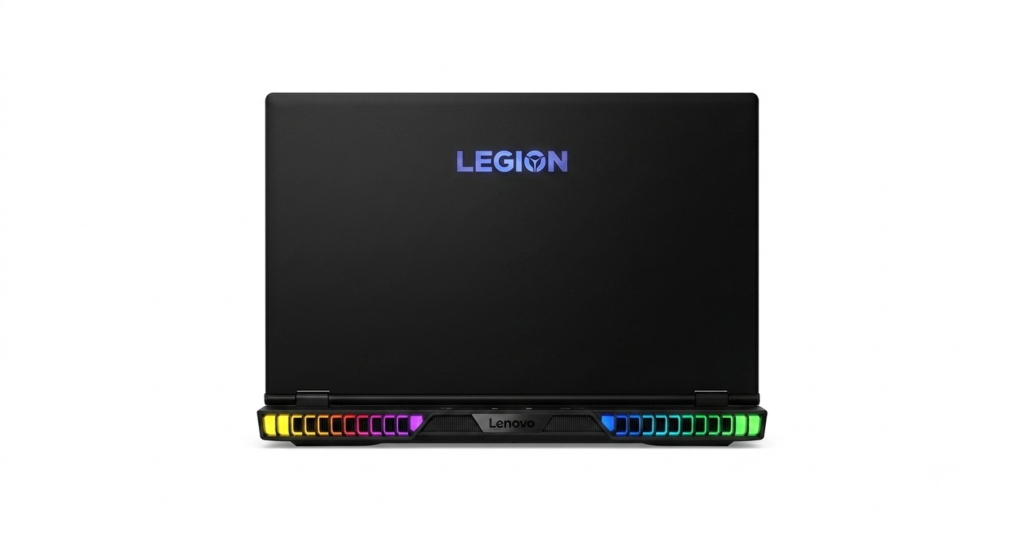
Lenovo has refined its structural philosophy with the Gen 10 chassis. Weighing in at just under 4.4 pounds and measuring a mere 0.7 inches thin at its max height, the Legion 7i is remarkably portable. The entire frame is cut out of high-grade anodized aluminum, featuring a matte finish that does an exceptional job of resisting oily fingerprint smudges during long typing stretches.
The aesthetic is heavily minimalized. The excessive RGB lighting strips of historical gaming laptops have been toned down in favor of a sleek, professional layout that allows it to easily sit inside a college library or office workspace. Furthermore, Lenovo kept the high-traffic connectivity inputs, such as the dedicated DC charging port and HDMI 2.1 connection, located neatly on the back edge to keep wires clear from your immediate desktop view.
🖥️ OLED Display and Audio Experience
The move to a native 16:10 aspect ratio PureSight OLED screen completely changes the viewing landscape. Spanning a rich $2560 \times 1600$ resolution, the OLED panel guarantees infinite contrast ratios, completely true ink-blacks, and an incredibly vivid 100% DCI-P3 color gamut representation. Whether you are color-grading high-definition video files or exploring shadows in dark gaming environments, the visuals are staggering.
For fast-paced gaming, the panel features a blazing-fast 240Hz variable refresh rate alongside a sub-1ms hardware response time, wiping away all traces of visual ghosting or motion stutter. The panel caps out at 500 nits of SDR brightness, though the screen features a glossy texture finish. While this glossy coat makes colors pop dramatically, it does reflect ambient overhead light bulbs rather heavily if you are working near a direct sunlight window.
Audio is managed via stereo side speakers custom-tuned by HARMAN and supported by Nahimic software optimization. They pump out incredibly loud, clear high ranges, though the thin chassis means lower-end bass notes sound slightly flat.
🏎️ Next-Gen Gaming and Productive Horsepower
Equipped with the combination of the Intel Core Ultra 9 chip and the brand-new NVIDIA RTX 5070 graphics processing unit, performance is snappy. The laptop integrates Lenovo’s AI Engine+, utilizing localized LA1 and LA3 coprocessor chips to monitor live hardware demands and continuously dynamically balance electrical power distribution between the processors.
Gaming Benchmarks (Tested at Native 1600p Resolution)
- Black Myth: Wukong (Cinematic Settings, DLSS Balanced, Frame Gen ON): Pushes right up to a highly playable 76 FPS average on customized performance tracks.
- Cyberpunk 2077 (QHD+ Native Profile, Ray Tracing Medium Settings): Solid 70 FPS average.
- E-Sports Titles (Valorant, Counter-Strike 2): Fluidly caps out way beyond 220+ FPS, seamlessly leveraging the high 240Hz screen refresh threshold.
Thermals and Fan Acoustic Noise
To keep this ultrathin notebook from overheating, Lenovo built a newly engineered Legion Coldfront: Hyper cooling layout. This configuration vectors hot exhaust out through structured cooling vents. In regular “Quiet Mode,” the machine keeps its mechanical fans running extremely softly at under 35 dBA. Cranking the software settings up to maximum “Performance Mode” pushes the processing power further, though it forces the cooling system to spin audibly loudly at roughly 50 dBA with max fan settings. The laptop deck does get warm to the touch under high gaming stress, but the system keeps its internal parts safely out of thermal throttling zones.
⌨️ Keyboard and Input Precision
The Gen 10 laptop implements a top-tier chiclet keyboard layout featuring a comfortable 1.6mm key travel distance and structural anti-ghosting technology. Typing out multi-page reports feels highly tactile and rapid. You get a full numeric keypad clustered together alongside true, independent uncompromised directional arrow keys. The backlighting setup can be thoroughly custom-configured using Lenovo Spectrum software controls. Right below the keyboard deck sits a spacious precision touchpad that tracks multi-finger gesture slides flawlessly.
🔋 Battery Longevity and Portability Limitations
The biggest trade-off of reducing the physical chassis depth comes down to the internal battery capacity. Lenovo lowered the internal battery down to an 84Whr cell to accommodate the slim size profile. Due to the constant power draw of the 24-core Intel Core Ultra HX processor architecture and the OLED display panel, battery backup is relatively modest.
For continuous lightweight office tasks like typing notes and managing web pages at mid-level brightness, expect around 4 to 5 hours of operational battery life. Playing graphics-intensive games away from the wall outlet will empty the battery cell in under an hour. Thankfully, the included charger features Rapid Charge Pro tech, which can successfully restore 50% of the total battery capacity in just 30 minutes.
🎯 The Good and The Bad
Pros
- Breathtakingly thin, light, and sleek all-aluminum structural build.
- Absolutely stunning 240Hz PureSight OLED screen with vibrant depth profiles.
- Features cutting-edge NVIDIA RTX 50-series graphics and Intel Core Ultra power.
- Highly tactile, well-spaced full keyboard layout with dedicated number pad.
- Future-proof internal connection choices featuring Wi-Fi 7 and dual M.2 upgrade slots.
Cons
- Slender profile runs notably warm under extensive heavy gaming stress.
- Short battery operational life when disconnected from structural wall power.
- Highly reflective glossy screen finish requires careful ambient room lighting placement.
🛠️ Final Verdict
The Lenovo Legion 7i (Gen 10) is an extraordinary engineering accomplishment. By shedding the historical bulk of classic desktop-replacement machines, it shifts seamlessly into a thin, elite hybrid laptop that is just as powerful at handling engineering STEM workloads or video editing as it is hitting maximum frames in cutting-edge games. While you do make standard compromises in battery capacity and glossy surface reflections, the unbelievable vibrant OLED panel and next-generation processing power make it an incredibly premium choice.
For its flawless premium design, high performance, and gorgeous visual display, the Lenovo Legion 7i (Gen 10) earns an exceptional 4.6/5 rating for Device Digest.
For an inside look at how Lenovo’s thermal optimizations perform and a complete breakdown of real-world gaming workloads on this refreshed hardware line, check out this comprehensive Lenovo Legion Pro 7i (2026) Review Video. This deep dive covers noise levels, internal component layouts, and power distribution across performance profiles to show you exactly how the hardware handles demanding loads.